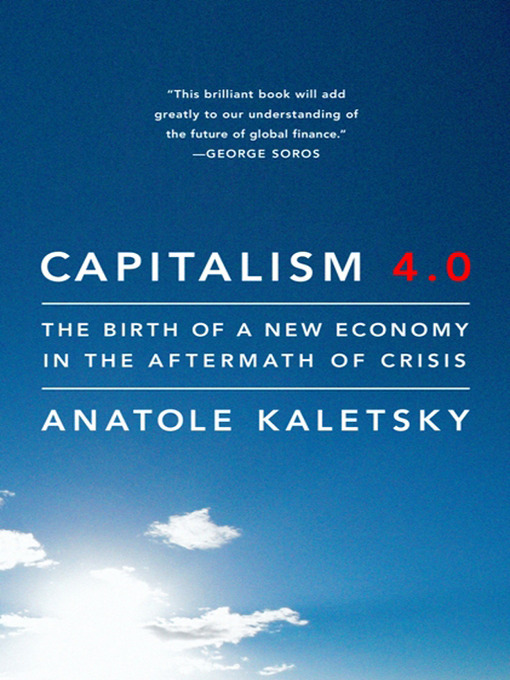
The crisis that followed the collapse of Lehman Brothers marked the fourth systemic transformation of capitalism since the late eighteenth century. The first of these great transitions launched the century of classical capitalism from the Napoleonic Wars to the Great Depression. The second version of capitalism emerged in the 1930s with the New Deal and government-led Keynesian economics, but blew up in the great inflation of the 1970s. That crisis launched the third age of capitalism starting with the elections of Margaret Thatcher and Ronald Reagan in 1979-1980.
This business-led period culminated in the "market fundamentalist" excesses of George W. Bush, Alan Greenspan, and Henry Paulson.
Market fundamentalism collapsed in 2008, but the crash has brought into play capitalism's unerring instinct for self-preservation. As a result, the next version of the capitalist system is now evolving: Capitalism 4.0. But as the global economy is reinvented, will American-led democratic capitalism or Chinese-style state capitalism prevail?
In this wide-ranging and controversial audio book, Anatole Kaletsky puts the upheavals of 2007-2009 in historical and ideological perspective. He describes the emerging features of the new capitalist model, explains how it will differ from previous versions, and suggests how the rise of Capitalism 4.0 could change politics, finance, international relations, and economic thinking in the coming decades.
-
Creators
-
Publisher
-
Release date
August 18, 2010 -
Formats
-
OverDrive Listen audiobook
- ISBN: 9781469055404
- File size: 379750 KB
- Duration: 13:11:08
-
-
Languages
- English
Why is availability limited?
×Availability can change throughout the month based on the library's budget. You can still place a hold on the title, and your hold will be automatically filled as soon as the title is available again.
The Kindle Book format for this title is not supported on:
×Read-along ebook
×The OverDrive Read format of this ebook has professional narration that plays while you read in your browser. Learn more here.